
 KAIZEN Digital Platform
 KAIZEN Digital ID
 Ecquaria Government Platform (EGP)
 Ecquaria Integration Centre (EIC)
 Ecquaria DevSecOps Stack
 Ecquaria Business Licensing System (BLS)
 Ecquaria SOP
 ADLC
ADLC
 Application Modernisation
 Cloud Migration
 Consultancy
 Judiciary
 Healthcare
 Tourism
 Education
 Waste Management
 Business & Trade
 Insights
 Media & Press Release
 Perspectives
 Events
 About TOPPAN Ecquaria
 Leadership Team
 Our Global Footprint
 Partners
 Trust & Compliance
Digital Government
Digital engineering for governments that scale
From national digital identity ecosystems to judiciary modernisation and citizen services, we help governments build resilient, citizen-centric digital platforms that scale beyond implementation.
Build AI Enabled Public ServicesDesigning the Future of
Public Service Delivery
To stay relevant, agencies must move past basic “e-services” toward a Citizen-Centric Intelligence model. TOPPAN Ecquaria’s framework focuses on four pillars of high-agency governance, including
1. Frictionless Citizen Experiences: The Front-End
Digital government must work the way citizens live. We design intuitive, internet-facing digital services that dissolve agency boundaries. By focusing on user-centric design and single-sign-on (SSO) ecosystems, we ensure that interacting with the state is seamless, accessible, and completely devoid of bureaucratic friction.

2. Intelligent Backend Orchestration
The true engine of digital government lies behind the scenes. We specialise in architecting robust backend systems that manage intricate government logic, cross-agency approvals, and complex case management. By automating repetitive tasks and streamlining workflows, we enable public servants to make faster, more accurate decisions.

3. AI-Empowered Public Services
(Agentic AI in Operations)
We build systems that think. By integrating AI natively into operational workflows, we enable capabilities like automated document verification, intelligent routing of citizen queries, and real-time fraud detection. This transforms static e-services into dynamic, cognitive platforms that continually learn and adapt.

4. Accelerated AI-Native Engineering
(Agentic AI in Development)
Our commitment to AI extends to how we build. We leverage advanced AI tools within our development life cycle to write cleaner code, automate rigorous security testing, and deploy mission-critical applications faster. This ensures our government clients receive highly resilient, secure and future-proof digital real estate.


IPOS Digital Hub (IDH)
Intellectual Property Office of Singapore (IPOS)
Problem
The Intellectual Property Office of Singapore needs to replace its existing IP2SG system with a new system built on technologies that provide a robust, secure, and highly scalable architecture.
Solution
The solution is to develop IDH, a new browser and mobile-responsive National Registries System that adopts microservices and API architecture to maintain or improve modularity and design flexibility.
Outcome
This system enhances customer centricity through an intuitive user interface, achieve operational excellence via workflow automation, and enables data analysis to provide insights for improving operational efficiency.
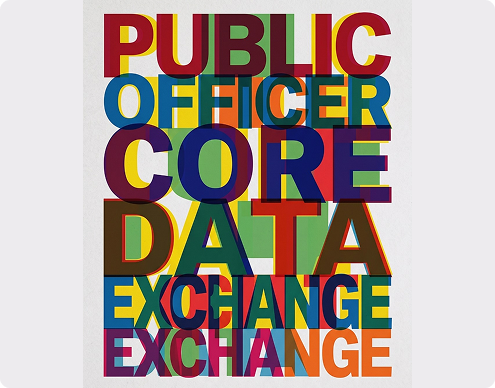
Public Officer Core Data Exchange
(POCDEX)
Singapore Public Service Division (PSD)
Problem
Downstream agency applications need a streamlined way to retrieve specific personnel data because upstream Public Officers’ human resource and finance data are dispersed across multiple independent government management systems.
Solution
Hosted on the Government Commercial Cloud, the Public Officer Core Data Exchange (POCDEX) acts as a centralised repository that collates a subset of this upstream data and allows downstream applications to retrieve it via real-time APIs or secure file transfers.
Outcome
By consolidating and packaging this data daily, POCDEX successfully provides various downstream systems and digital workplace initiatives with easy access to essential personnel information.
GovTech Singapore
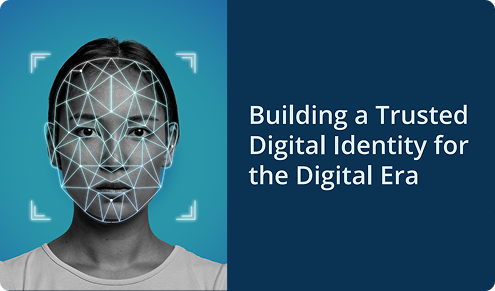
National Digital Identity (SG-Face)
Problem
Singapore required a secure and scalable way for citizens to authenticate digitally across both public and private sector services.
Solution
Supported the SG-Face ecosystem through secure biometric integration capabilities enabling trusted facial authentication services.
Outcome
More than 4 million Singapore citizens can securely access digital services using consent-driven facial verification without specialised hardware or enrolment friction.

Government of The Bahamas
National E-Services Platform
Problem
The Bahamas lacked an integrated national ICT governance framework, unified citizen services, and government-wide digital infrastructure.
Solution
Partnered with IDAI and the Bahamian government to deploy a nationwide E-Government programme and integrated online citizen services platform.
Outcome
Enabled streamlined digital public services, online payments, and interoperable citizen services modernising public sector service delivery nationwide.

Qatar Service Platform
Qatar
Problem
Government e-services were fragmented across agencies, creating inconsistent citizen and business experiences.
Solution
Developed an integrated government-wide digital services platform spanning over 52 services and 10+ agencies.
Outcome
Accelerated public service innovation and improved accessibility of government services nationwide.